
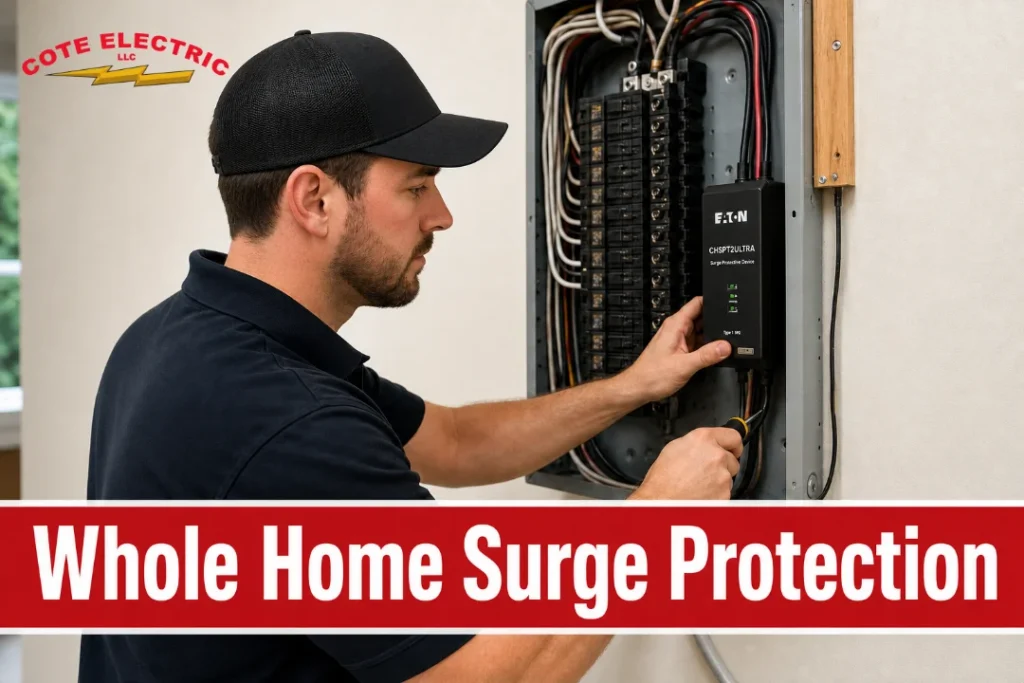
Whole Home Surge Protection: Protect Your NH Home This Summer
Summer in New England brings afternoon thunderstorms, power surges from the grid, and the constant hum of air conditioning units cycling on and off. Each of these is a threat to your electronics, appliances, and peace of mind. A whole home surge protector stops dangerous voltage spikes before they enter your house, protecting everything from your air conditioning system to your home office setup. Unlike a power strip sitting behind your TV, whole home surge protection guards your entire electrical system. This is what separates a reactive fix from a real defense.
At Cote Electric, we install whole home surge protection systems that give Manchester, Hudson, and South Central New Hampshire homeowners real confidence when the weather turns ugly.
What Causes Electrical Surges (And Why They Matter)
Electrical surges are temporary spikes in voltage that travel through your home’s wiring. They last only fractions of a second, but that’s all it takes to damage or destroy electronics and appliances.
The most obvious culprit is lightning. A direct or nearby strike can send thousands of volts through your electrical system. Less dramatic, but equally real, are surges from the power grid itself. When utility crews switch loads between transformers, or when large appliances in your neighborhood power up, the voltage wave ripples down the line to your house. Even your own air conditioning compressor creates a surge every time it cycles off, straining your refrigerator, washer, dryer, and other equipment.
Over time, these micro-surges add up. They shorten the lifespan of expensive electronics and appliances without you ever seeing a dramatic failure. You just notice your devices die younger than they should.
Whole Home Surge Protection vs. Power Strips
A power strip with surge protection plugs into an outlet and protects whatever sits behind it. That works for a few devices in one corner of your house. But it does nothing for your electric panel, air conditioning system, water heater, or the wiring feeding power throughout your home.
Whole home surge protection installs at your electrical panel and intercepts voltage spikes before they travel anywhere inside your house. Think of it as a bouncer at the front door, stopping trouble before it enters the building. Every outlet, every appliance, every light fixture downstream of the protector gets the same defense.
The two work together well. A whole home system handles the big surges. Individual power strips protect sensitive devices like computers or entertainment systems from any residual spikes that slip through.
How Whole Home Surge Protection Works
A whole home surge protector is a device that connects to your electrical panel (or sits between your panel and the meter). It contains metal oxide varistors (MOVs) or similar components that detect sudden voltage spikes and divert the excess electricity safely to ground before it can damage your home’s wiring or equipment.
When voltage stays normal, the protector does nothing. You don’t see it or think about it. When a surge arrives, it reacts in milliseconds, clamping the voltage to a safe level and sending the excess energy harmlessly into the ground.
Modern surge protectors are engineered to handle multiple surges without degrading. A quality unit should protect your home for years, though the components inside can eventually wear out and may need replacement.
Why Summer Is Prime Time for Surge Damage
New Hampshire summers bring thunderstorm season. Between June and August, the region sees an average of 30-40 thunderdays per year. While direct lightning strikes are rare (the odds are roughly 1 in 500,000), nearby strikes and lightning-induced surges on power lines are common enough to be a real concern.
At the same time, summer means your air conditioning system is running hard. Every on-and-off cycle of the compressor creates a small surge. Couple that with heavy usage of other appliances (pool pumps, dehumidifiers, electric water heaters running during peak demand), and your electrical system is working at higher capacity with more opportunities for problems.
This is when homeowners typically notice electronics and appliances failing. Installing surge protection now, before peak storm season, ensures your home’s systems are defended when they need it most.
What Whole Home Surge Protection Protects
When installed properly, a whole home surge protector defends:
– Air conditioning systems and heat pumps
– Electric water heaters and furnaces
– Refrigerators, dishwashers, and kitchen appliances
– Televisions, computers, and home entertainment systems
– Garage door openers and security systems
– Smart home devices and Wi-Fi equipment
– Washer, dryer, and laundry equipment
– Lighting systems throughout the house
The protection extends to every circuit in your home, in every room, without needing individual devices or additional purchases.
Cote Electric’s Surge Protection Installation Service
Cote Electric has served Manchester, Hudson, and communities across South Central New Hampshire, Northern Massachusetts, and Southern Maine since 1987. We’re a Generac authorized dealer, a Heritage Home Service family company, and a BBB Accredited Business with an A+ Rating. In 2025, we won the Angi Super Service Award.
We install whole home surge protection systems as part of our full electrical services, which also include electrical panel upgrades, rewiring, electrical safety inspections, and emergency electrical repair.
Our process is straightforward:
1. We assess your electrical panel and discuss your surge protection needs.
2. We recommend a system appropriate for your home’s age, equipment, and usage.
3. We install the protector at your panel, ensuring proper grounding and compliance with local code.
4. We test the system to confirm it’s operating correctly.
You receive a 100% customer satisfaction guarantee on every installation. We also offer financing through Synchrony so that surge protection doesn’t have to come out of your savings.
Signs You Need Surge Protection
Some homes give clear warning signs that surge damage is happening:
– Frequent breaker trips or flickering lights during storms
– Electronics that fail unpredictably or seem to “die young”
– Burning smells near outlets or appliances
– Appliances that work inconsistently (refrigerator runs too often, water heater takes longer to heat)
But the most honest answer is this: if you live in New Hampshire and you haven’t installed whole home surge protection, you need it. The cost of protection is far lower than the cost of replacing a water heater, HVAC system, or other major appliance.
Electrical Safety Inspections: Identifying Other Risks
If you’re concerned about surges, you may also want to schedule an electrical safety inspection. Cote Electric performs these inspections to identify outdated wiring, overloaded circuits, grounding problems, and other issues that create fire hazards or make your electrical system more vulnerable to surge damage.
An inspection often reveals problems you didn’t know existed. Many older homes in Manchester and Hudson still have aluminum wiring or inadequate grounding that increases risk. A professional inspection gives you a complete picture of your home’s electrical health and a prioritized list of repairs.
Frequently Asked Questions
How much does whole home surge protection cost?
Costs depend on your electrical panel type and the protector model you choose. Cote Electric provides a free estimate during a brief site visit. Many customers find the cost is recovered quickly when you factor in the price of replacing a failed air conditioning compressor or water heater.
Does surge protection work during a power outage?
Surge protection prevents voltage spikes during normal operation and during storms. During a complete power outage (no electricity flowing), there’s no surge to protect against. Once power is restored, the protector is ready to defend again.
Can I install a whole home surge protector myself?
Installation requires working at your electrical panel, which carries serious shock and fire hazards if done incorrectly. It also must meet New Hampshire electrical code. Always hire a licensed electrician.
How long does a surge protector last?
A quality unit typically lasts 5-10 years depending on how many surges it intercepts. After a major surge event, we recommend having Cote Electric inspect the protector to confirm it’s still functioning properly.
What’s the difference between a surge protector and a surge suppressor?
These terms are often used interchangeably. Both refer to devices that prevent voltage spikes from damaging your equipment. The function is the same.
Does my homeowner’s insurance cover surge damage?
Most policies do not cover damage from power surges. Installing surge protection is more cost-effective than hoping insurance will reimburse you.
Conclusion
Whole home surge protection is one of the smartest investments you can make in your New Hampshire home. It costs less than a single high-end appliance, protects all of them at once, and gives you genuine peace of mind during storm season.
If you’re in Manchester, Hudson, or the surrounding areas of South Central New Hampshire, Northern Massachusetts, or Southern Maine, Cote Electric is ready to help. We’ll assess your home’s needs, recommend the right system, and install it with our 100% satisfaction guarantee backing the work.
Call Cote Electric today at (603) 624-7970 to schedule your free estimate, or schedule an appointment online. We offer flexible financing to fit your budget, and our team is standing by.